
Memorial Hermann Heart & Vascular Institute at Southwest Hospital
General Information
Memorial Hermann Heart & Vascular Institute at Memorial Hermann Southwest Hospital opened in 2006 as one of Houston's first freestanding heart hospitals outside of the Texas Medical Center. As a member of our community, we welcome you to our award-winning, comprehensive cardiovascular program, which continues to expand our services and offer you the highest-quality, compassionate care.
The Institute’s patient-centered continuum of cardiac care is provided by a dynamic team of affiliated cardiologists, cardiovascular surgeons, specialty-trained nurses and advanced practice providers who collaborate to create individualized treatment plans for you or your loved one. Memorial Hermann remains at the forefront of advancing heart health, from preventive care to cardiac emergencies to complex surgical procedures.
Our Heart & Vascular program provides advanced diagnostic testing and a full spectrum of treatment options to support cardiovascular health.
Our state of the art catheterization labs allow our specialists to identify heart conditions and treat blockages with precision. In our interventional radiology suites, clinicians use advanced imaging—such as CT scans and ultrasound—to guide minimally invasive procedures.
We also offer specialized care in our electrophysiology labs, where experts perform cardiac ablations, evaluate rhythm disorders, and implant pacemakers to help regulate heart function.
For complex cardiovascular needs, our hybrid endovascular surgical suites combine the benefits of open surgery with minimally invasive techniques, often supported by advanced imaging. This integrated approach helps deliver safer procedures, faster recovery times, and improved patient outcomes.
Advanced Cardiac Care
Robotic Cardiac Surgery
At the Institute, our expert heart specialists use advanced techniques, including intricate robotic cardiac surgeries, to enable faster recovery and reduce risk in complex cases. We treat everything from common to complex heart and vascular conditions, offering a range of traditional, minimally invasive, and robotic procedures that are tailored to each case.
Learn More About Robotic Cardiac Surgery »
Leading-edge Heart Attack Care
“Time is muscle.” A heart attack sets off an urgent countdown because blood flow blockages can put vital heart tissue at risk. Angioplasty works by reopening the artery at the source of the blockage, restoring circulation before damage becomes irreversible. Speed matters, and the Institute has built its reputation in heart attack care around rapid response protocols that may reduce heart damage. Door-to-balloon times routinely surpass national expectations, coming in well under the 90-minute guideline recommended by leading cardiology organizations. This terms refers to time elapsed from when a heart attack patient comes into the hospital to that point when a balloon angioplasty restores blood flow.
State-of-the-Art Cardiac and Thoracic Surgery
At the Institute, cardiothoracic and vascular surgeons draw on extensive experience to deliver advanced surgical care for complex heart disease conditions, including coronary bypass procedures performed on beating hearts and refined minimally invasive approaches to aortic valve replacement.
Leader in Electrophysiology
If you have a heart rhythm disorder such as atrial flutter or atrial fibrillation, the Institute excels in diagnosis and treatment.
In our cardiac catheterization labs, a highly experienced team of interventional cardiologists and electrophysiologists uses sophisticated heart-mapping technology to pinpoint abnormal electrical signals that cause irregular heartbeats. Then they develop a detailed and individualized plan to treat the condition.
For atrial fibrillation, for example, a minimally invasive procedure utilizes radiofrequency energy to restore a more normal heart rhythm. For many patients, this procedure can significantly improve symptoms, quality of life and long-term heart health. We can also perform complex revision procedures when additional treatment is needed.
The Institute can implant cardiac rhythm management devices, including pacemakers that help the heart beat in a “normal” rhythm, and implantable cardioverter-defibrillators (ICDs) that may prevent sudden death in people diagnosed with high-risk arrhythmia. Biventricular ICDs may also be implanted for patients diagnosed with more advanced heart failure.
Our specialists can also offer the most current left atrial appendage closure (LAAC) devices. These small, parachute-shaped implants seal off the left atrial appendage, an area of the heart where blood clots commonly develop. This procedure helps reduce the risk of stroke for certain patients.
The Institute offers WATCHMAN FLX™ and AMULET™ LAAC devices for patients who require them.
Learn More About Atrial Fibrillation (AFib) Treatment »
Advanced Vascular Care
The Institute provides the most advanced solutions for comprehensive vascular and endovascular care, offering both open and minimally invasive procedures. Our specialists combine advanced diagnostics with a full range of state-of-the-art treatment options. Services include noninvasive vascular testing, percutaneous (through-the-skin) procedures, and open procedures. Conditions we treat include abdominal aortic aneurysm, deep vein thrombosis, peripheral arterial disease, venous insufficiency and carotid stenosis. Affiliated physicians and specialized clinical teams provide care informed by their extensive knowledge of managing complex vascular disease.
To support this high level of care, the Institute includes a state-of-the-art hybrid endovascular surgical suite explicitly designed for cardiovascular and vascular patients. By integrating the capabilities of a cardiac catheterization lab and a traditional operating room, the hybrid suite allows for faster, more flexible treatment of the most complex cases. Minimally invasive procedures performed in this setting include thoracic endovascular aortic repair (TEVAR) and endovascular abdominal aneurysm repair (EVAR).
The Institute also houses a dedicated neuro-endovascular suite, where a full spectrum of advanced procedures may be performed. These may include diagnostic angiography and endovascular treatment of complex brain conditions, including aneurysms. Our team also treats arteriovenous malformations, skull base tumors, and stroke that may require thrombectomy to remove a clot.
Cardiac Rehab
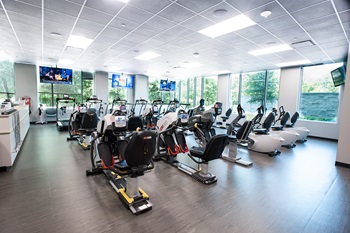 The cardiac rehabilitation program at Memorial Hermann Southwest, inaugurated in 2005, supports patients recovering from a wide range of heart conditions and procedures, including those who have received treatment elsewhere. Maybe you have experienced a heart attack, or you suffer from angina. You may have undergone bypass surgery, angioplasty, or heart or valve surgery. Perhaps you received a pacemaker, defibrillator, stent or left ventricular assist device (LVAD), and you still need support. Patients living with congestive heart failure may also benefit from our program.
Patients who have undergone complex cardiac procedures may look forward to the day they’re referred to cardiac rehabilitation to begin regaining “their former self.” At the Institute, our cardiac rehab is a supervised program with carefully chosen exercise and physical activity recommendations, along with cardiac rehab education and personalized, specific lifestyle coaching. The entire curriculum is designed to help heart patients recover safely and efficiently, and to regain physical function that allows them “to do the things they used to do.” Easy does it, as our teams constantly endeavor to prevent any recurrence. Each person receives a multi-tiered plan structure developed “just for them.”
Patients progress step-by-step to ensure they are ready to move forward with each advancement in their rehab plan. Each component plays a role in returning a patient to their maximum, safe level of not only physical but also mental functioning. Research and patient anecdotes suggest that patients who participate in and complete a cardiac rehabilitation program to manage their cardiac condition have much greater success than those who choose not to participate.
The American Association of Cardiovascular and Pulmonary Rehabilitation (AACVPR) has fully certified our cardiac rehabilitation program.
Please find us on the first floor of the Pavilion.
*Physician referral is required for outpatient cardiac rehabilitation.
Parking Information
Surface parking is available in the Southwest lot located off of the Southwest Freeway frontage road. Enter the Memorial Hermann Heart & Vascular Institute at Memorial Hermann Southwest through the main doors at 7787 Southwest Freeway.
Contact Us
If you’d like a referral to a heart and vascular specialist or want more information about our services, please fill out the form below. For other inquiries, such as obtaining medical records, imaging reports or test results, please call (713) 222-CARE (2273).